RC Submarine / ROV
Lead designer, Open-brief robotics project, 2022
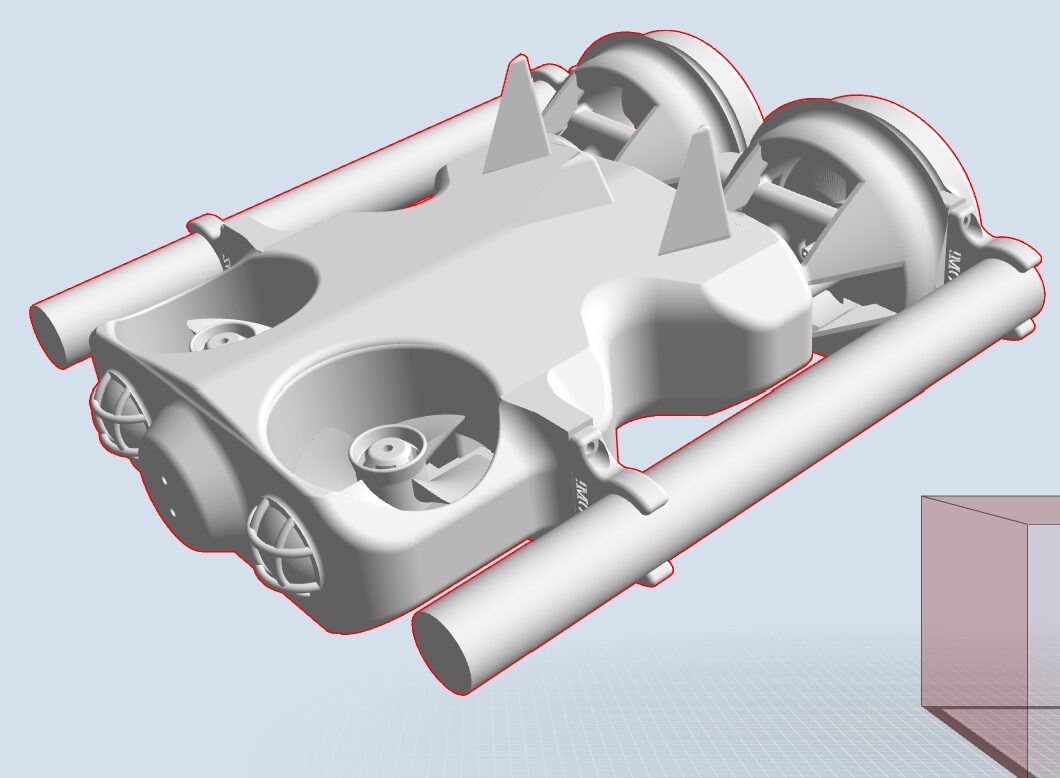
The full assembly from Onshape: four thrusters, PVC buoyancy rails, and the sealed electronics bay. Drag to rotate, scroll to zoom.
| Role | Lead designer |
|---|---|
| Context | Open-brief robotics project |
| Dates | 2022 |
| Field | Underwater Robotics, Systems Engineering |
| Skills | Onshape, Electrical Integration, Custom Controller, 3D Printing, Circuit Design, Embedded Systems, Waterproofing, Hardware Integration |
The problem
Underwater environments are among the least forgiving contexts for mechanical design. Pressure, corrosion, waterproofing failure, and zero serviceability once submerged mean every decision has consequences that cannot be corrected in the field. For a 10th grade robotics assignment with an open brief, that was the point. The goal was to own every subsystem of a multi-domain vehicle from first principles and find out what breaks.
What I built
A tethered ROV designed from scratch in Onshape and manufactured entirely by 3D printing in PLA. Two-person team. I owned mechanical design, electrical integration, and the custom surface controller. My partner handled embedded software.
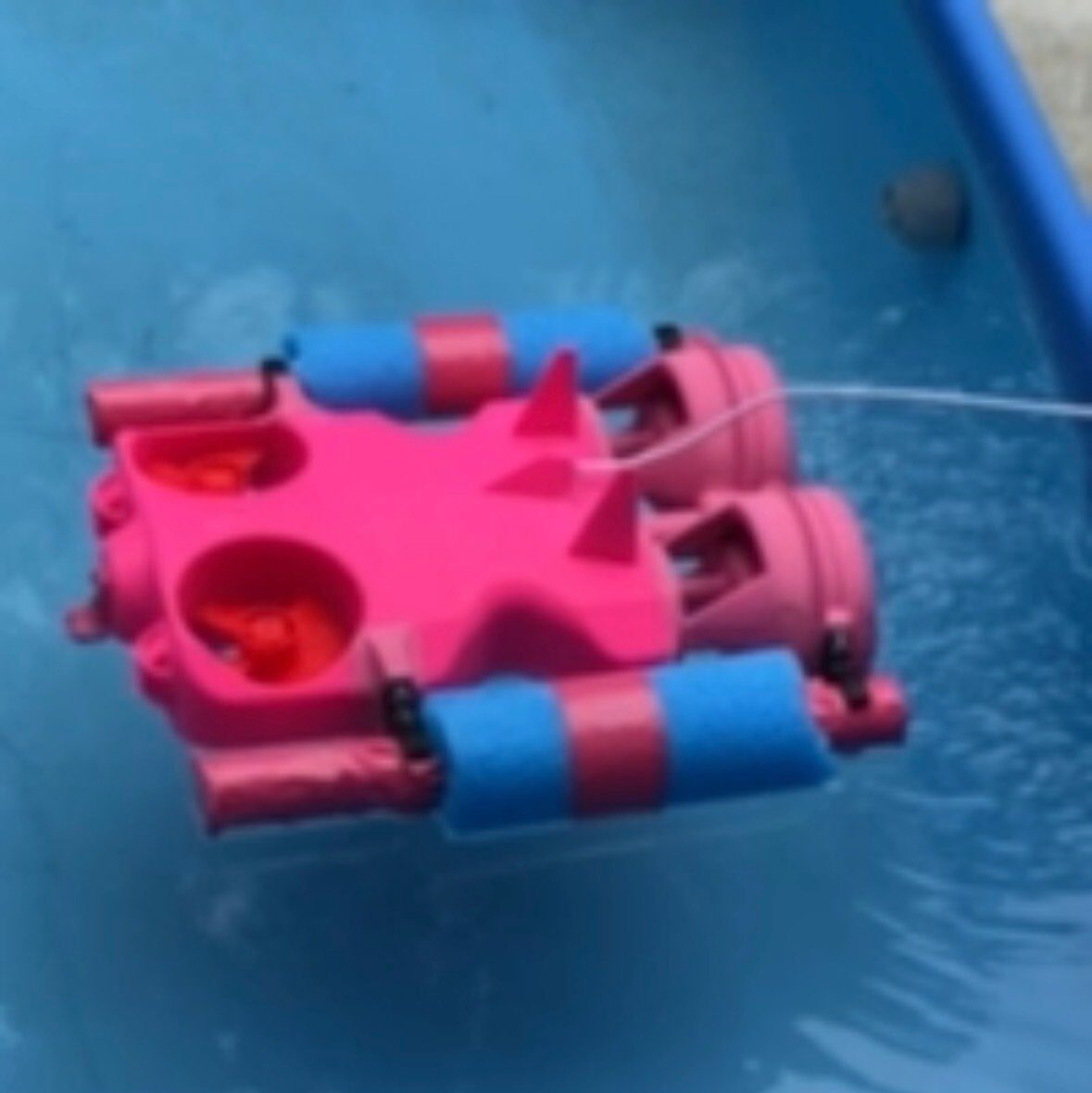
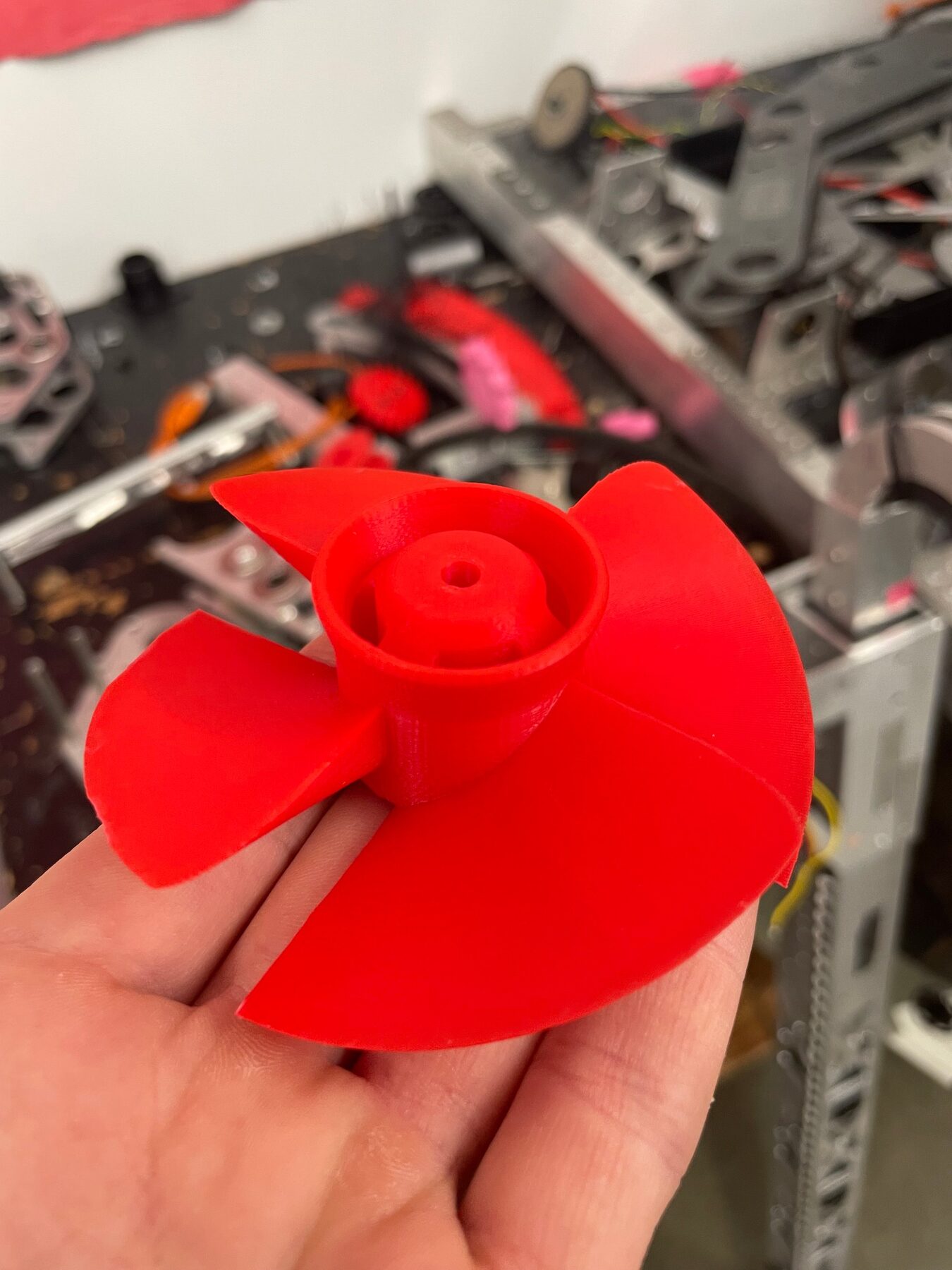
- Propulsion. Four motors, two vertical for depth and two horizontal for navigation. Propellers modeled on existing designs, then adjusted in CAD and reprinted until thrust and fit were right
- Buoyancy. Passive neutral buoyancy through sealed PVC side rails, so the motors do not have to work to hold depth
- Waterproofing. Sealed to a 10 m design spec. Electronics isolated in waterproofed compartments, all penetrations pressure-sealed
- Controller. Custom-designed surface unit on a tether. Designing it rather than buying one doubled the scope and gave full system understanding at both ends
- Payload. GoPro bow mount for documentation during pool and lake tests
Outcomes
- Operated in two test environments, a controlled pool and an open lake
- Neutral buoyancy achieved on target
- Zero waterproofing failures across testing
- Full tethered command authority over all four motors independently
Commercial platforms like the BlueROV2 abstract away the hardest design problems. This project did not, on purpose.