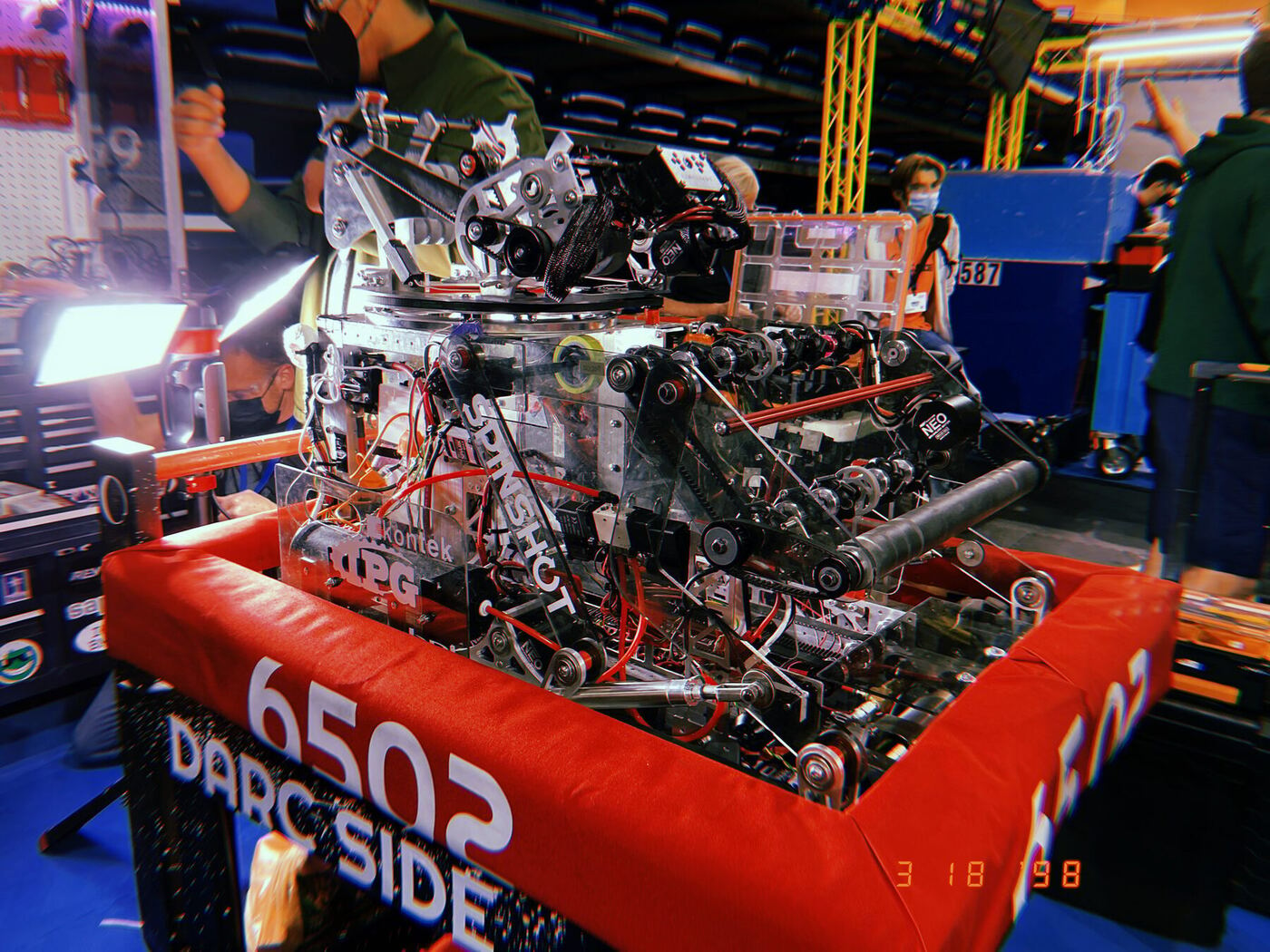
DARC SIDE, FRC Team 6502
Member to Pit Lead to Technician to Captain, FIRST Robotics Competition, 2020 to 2024
| Role | Member to Pit Lead to Technician to Captain |
|---|---|
| Context | FIRST Robotics Competition |
| Dates | 2020 to 2024 |
| Field | Competition Robotics, Engineering Leadership |
| Skills | Org Design, Fundraising, Systems Integration, CAD, Field Repair, Leadership, Circuit Design, Embedded Systems, Mechanical Assembly, Onshape, 3D Printing, Mentoring |
The problem
FRC is a direct simulation of high-stakes product delivery. A new game is announced each January and every team has six weeks to design, build, and field a competition-ready robot from scratch. The rules change. The field changes. The clock does not. More than 3,000 teams from 26 countries compete each year, and success depends on whether the team behind the robot can decide fast, absorb failure mid-competition, and iterate faster than everyone else in the bracket.
DARC SIDE had a harder version of that problem. When I joined in fall 2020 there was no formal onboarding, no structured training, and no institutional playbook. No scoreboard to validate against. Just a lab, a partially built robot, and a team learning from scratch.
What I built
Role progression
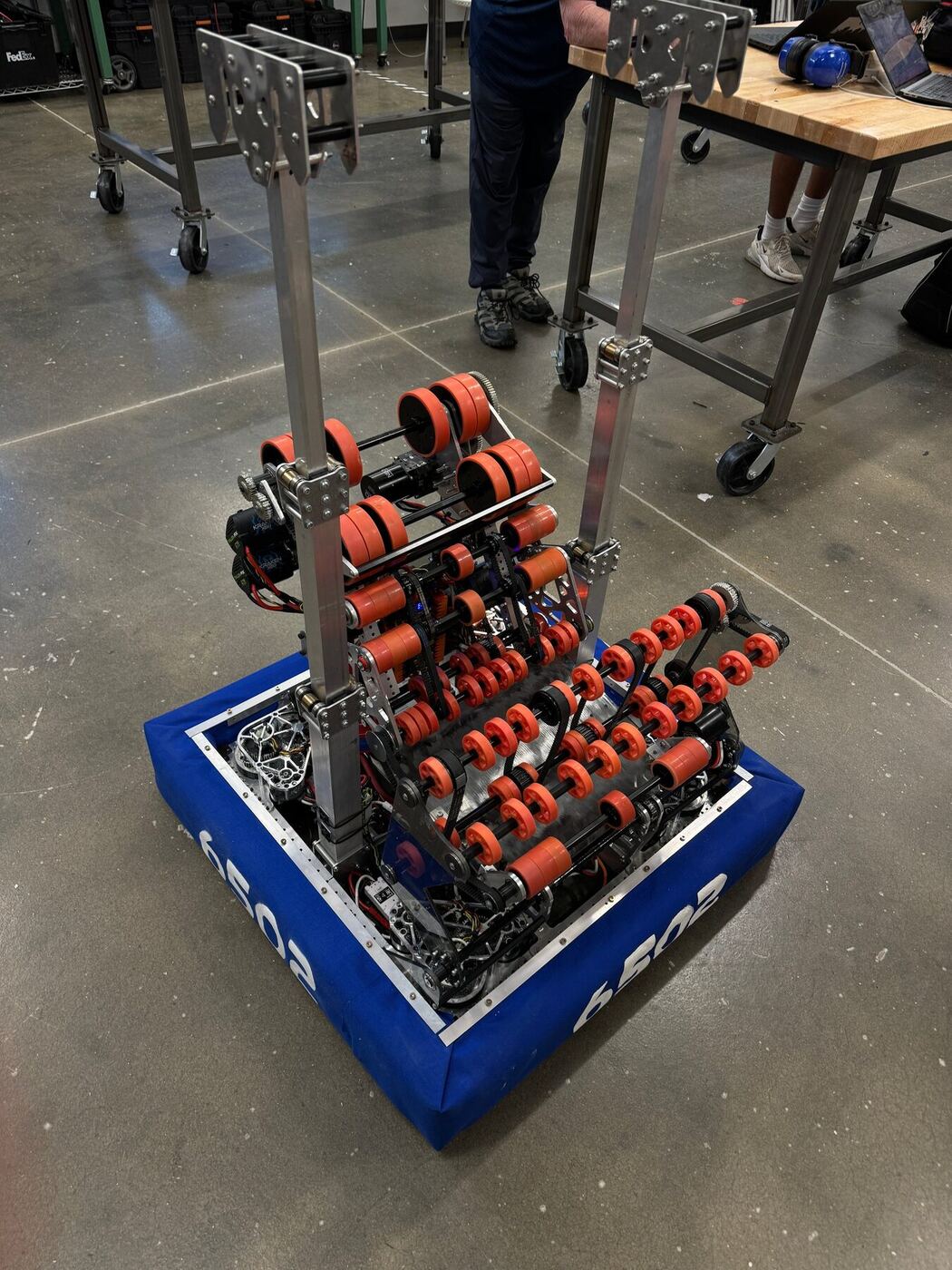
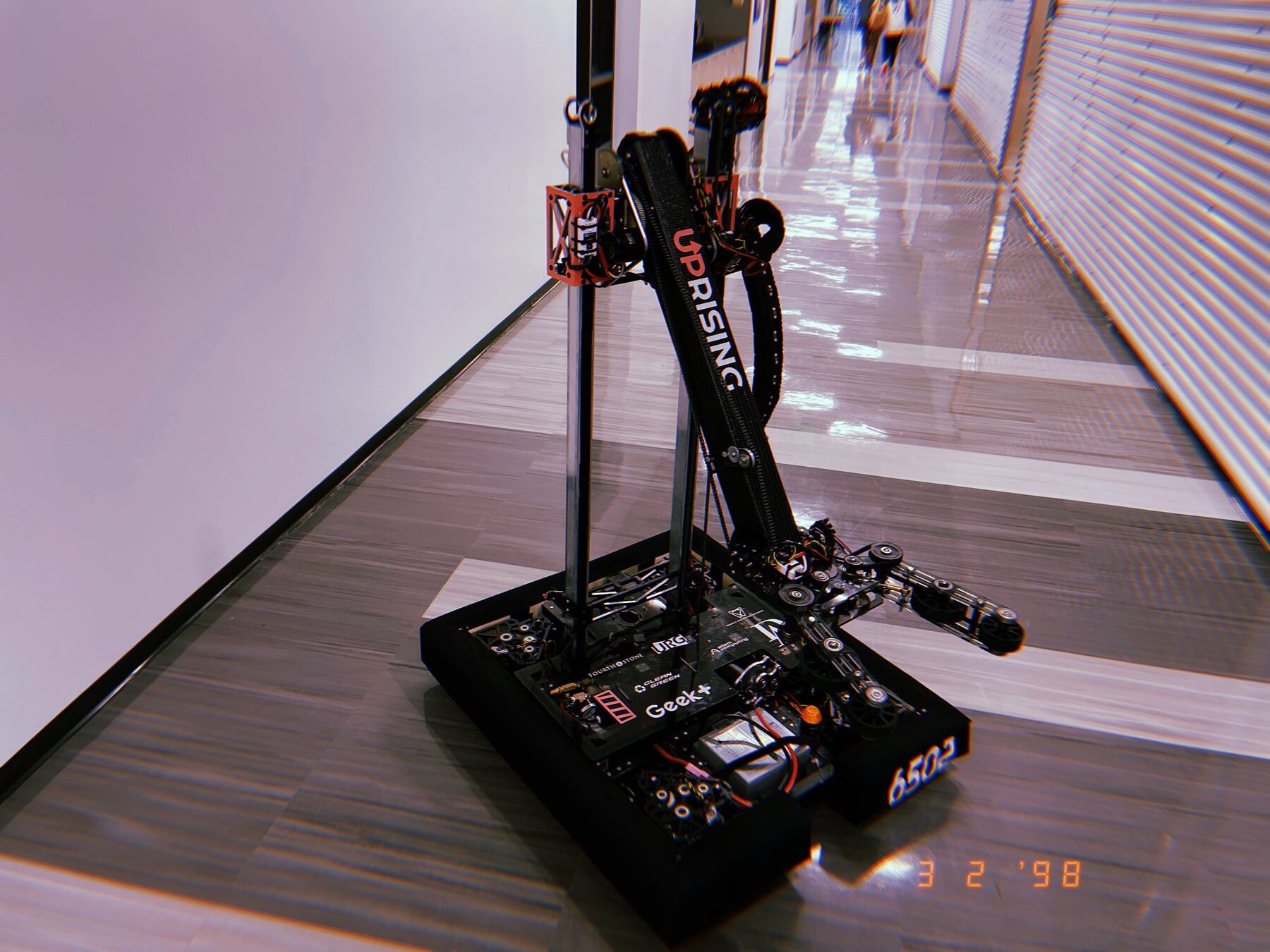
Three competitive seasons, spring 2022, 2023, and 2024. Three games. Three robots built from zero under a six-week clock. My responsibilities grew each year.
- Member (2020 to 2021, onboarding). Designed, machined, assembled, wired, and helped code robots that could shoot with pinpoint accuracy from up to 50 feet and climb vertical ascending mechanisms
- Pit Lead (2021 to 2022). One of the first 10th graders ever assigned the role on this team. Led 15 pit crew members responsible for robot upkeep and repair between competition rounds
- Technician (2022 to 2024). The sole person authorized to perform repairs on the robot while on the competition field, including swapping entire mechanisms mid-match. Worked across both pit crew and drive team
- Team Captain (2023 to 2024). Recruited 20+ of the team’s 60 members. Applied for over $100K in grants and raised $42K, the most in team history. Did the bulk of robot design, assembly, and maintenance while leading the program
The organizational build
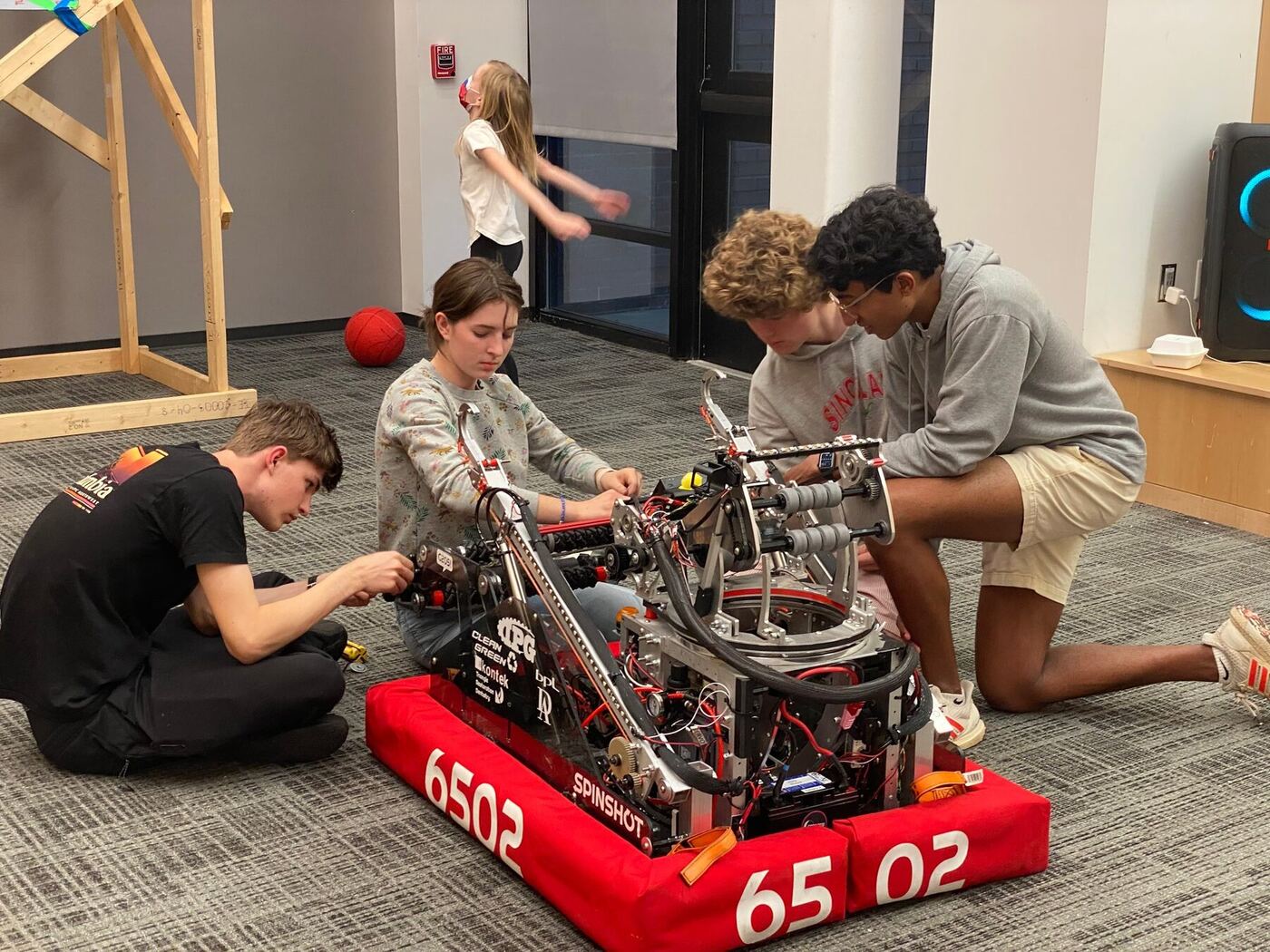
The harder problem was survivability. I came up through a team with no formal structure, no onboarding program, and no institutional memory. By the time I was captain I had four years of firsthand evidence for how teams fail when they do not build systems that outlast their members. I diagnosed three gaps and addressed each directly.
- Onboarding. Designed and ran the team’s first daily pre-season training sessions for new and returning members, and set up student-led, student-scheduled meetings, a structure uncommon among NC FRC teams
- Pipeline. I competed in FIRST LEGO League for two years before high school and earned awards at that level. As captain I pushed teammates to mentor local FLL teams directly, closing the loop on purpose. The best pipeline is built by people who came through it
- Outreach. Redirected team funding to the team’s first outreach events at local venues and science museums, reaching several hundred younger students. Partnered with a children’s hospital on STEAM activities for patients. Organized the team’s first bonding events with other teams before and after competitions
Competition environment
Competitions meant diagnosing and fixing system failures in minutes, not hours, in a loud pit with the next match already on the clock. That shaped how I think about building systems. Reliability is not a feature. It is the baseline requirement.
The team competed at the NC State Championship each year I was on it. In 2023 the team ranked top 10 of 77 teams in the state. Awards across the three seasons: Best Code (2022, the first ever for an NC team), Team Spirit (2022, the first ever for DARC SIDE), Quality (2023), and Judges’ Choice (2023).